Trans-Solar Federation Worlds
Introduction
In this page you will find information regarding the most mentionable, important and special worlds of the Trans-Solar Federation, Sol's governing body. The page will be divided in 3 topics:
Core Worlds.
- Worlds that compose the inner economy of the TSF and hold its primary governing authority. They find themselves at the center of Solar territory and are the most well maintained.
Corporate Worlds.
- Worlds that are governed by the many Megacorporations that reside within the TSF. These worlds have smaller governmental oversight and are characterized by predatory Corporate activity.
Fringe Worlds
- Worlds that compose the outer rim of the TSF territory. These worlds often have very decentralized leadership and oversight and are the frontier of exploration.
(Due to the very extensive nature of this page, do pay attention to the right side of the stellar system names, there should be a button where you can collapse text to make it more intuitive to read).
Core Worlds
Governed by the High Council of Sol, the Solar System is Humanity's cradle, and thus is the most economically developed and technologically advanced human system in the Trans-Solar Federation. Having 3 primary colonies and multiple outposts across its planetary bodies, it is self-sustaining and utopian. Trade routes are kept policed by the TSF Police Department and and petty criminal activity is nearly non-existant. The asteroid belts are home to multiple outposts of miners, mercenaries and scientists who sustain themselves on the thriving economy that the crowded belt provides. Not only an economic hub, the Sol system is also the center of cultural exchange and governmental activites in the TSF. The TSF President, Vice-President and The Solar Senate all can be found on Earth and the Moon.
Earth
Characterized by its lush green vegetation and its blue ocean and atmosphere, is the capital of the Trans-Solar Federation. Humanity's greatest achievements and history can be found here. Nothing short of an utopia, the planet was cleansed of its harmful industrial waste and post-Eastern Seas War fallout, allowing nature to recover and the ecossystem to be rebuilt, meaning labour was almost completely restructured into management, arts, sciences, bureaucracy and other abstract forms of work. Culturally, influenced both by Human culture and the posterior alien tradition, Earth became an epicenter of miscegenation, furthering the idea that the TSF is a multi-cultural federation. Even with the new waves of Alien ethos, Earth still preserves it's original lifestyle, having a massive field of archeology and anthropology that works tirelessly to preserve and safeguard Humanity's heritage. Economically, Earth houses the richest of the rich, CEOs of Megacorporations such as NanoTrasen and Cybersun and high-ranking political figures all delight from Earth's luxuries, but this does not mean the lower classes live a low-quality life, much by the contrary as is found in all core worlds. Earth is also the center of TSF Ministry of Defense and the TSF Naval Corps, with academies taking in Human and Alien cadets that will, one day, form the backbone of the TSFMC and other Military institutions. For more information on Earth and Humans, check out this page.
Mars
The red planet was the first planetary Human colony outside of Earth, founded in the year 2100. A planet raised and established by Industrial activity, Mars is the backbone of the Sol industry due to its large mineral and plasma deposits. Megacorporations such as NanoTrasen and Cybersun have always been present in the industrialized planet, directing its development since its foundation. In 2125, a massive detonation of plasma in a NanoTrasen mining colony resulted into a reformulation of safety standards and operations in Mars, changing forever how industrial relations worked in the Sol system and TSF as a whole. This incident also marked the beginning of a corporate war between NanoTrasen and Cybersun that would still be active until present times (For more information, check out History). The people of Mars have long felt a sense of bitterness towards the incident itself, feeling like the corporations neglected their safety and that TSF merely slapped the Megacorpo's wrists, not attributing any real punishment towards the ones responsibles for the incident. Current day Mars is terraformed to Earth-like atmosphere and climate, while still focusing in industrial production, the air quality does not come near the cleaness of Earth, and instead comes closer to a pre-TSF industrial metropolitan center in its more productive zones. In spite of this, Mars counts with massive cities and towns, highways spanning hundreds of miles and space ports. Given Mars' culture about work and factories, they often attribute more value to profit and productivity than other colonies in the TSF, and the trope of Martians being hard-workers has been easily disseminated for years to the point 'Made in Mars' is a synonym of quality, especially after the foundation of Jarnsmiour Blacksteel Foundation, the leading corporation of steel equipment on Mars, and the Sol System as a whole. Olympus Mons, the tallest volcano in the Solar System, was turned into touristic zone with dozens of resorts and skiing slopes. In 2178, Cybersun used this as an opportunity to build a Space Elevator, profitting billions of spesos every year bringing materials to orbit, but as technology advanced and turned the elevator obsolete, it was turned into a touristic exposition. In similar manner the Gale Crater and the Jezero Crater were also turned into landscape marks, becoming lakes as the terraforming project took place.
Moon
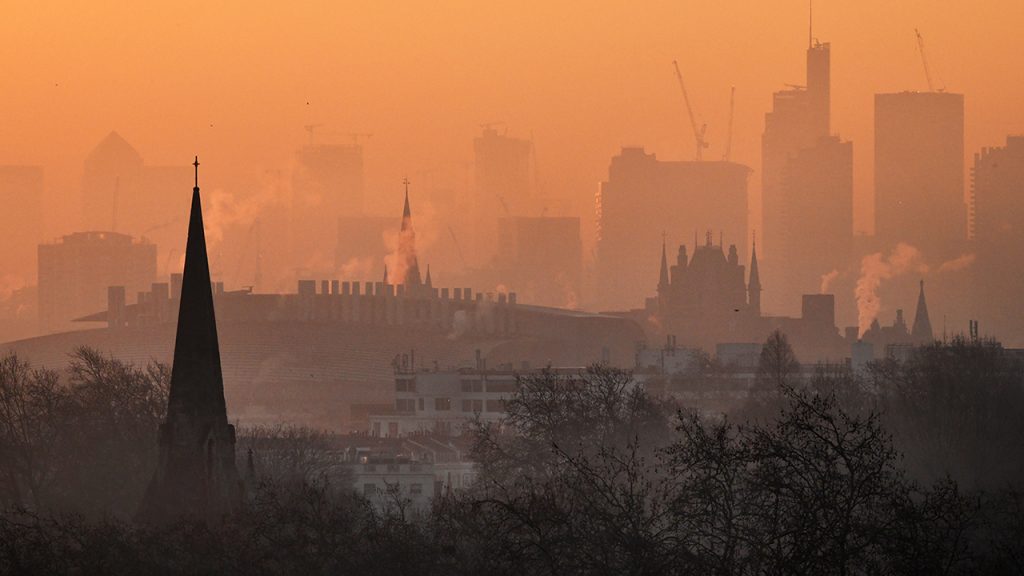
The silver-lined planetoid that orbits Earth since 1 billion years after its birth was the first true Human colony outside of Earth, originally founded as an outpost and science base during the Second Great Space Race, Luna developed to be an administrative center of the TSF and many bureaucratic buildings cover the lunar landscape, such as the Solar Senate edifice. The Moon is also a training academy for low-gravity activities, and as such many TSF Police Enforcement, Military institutions and PMCs use the Moon as a boot camp for the training of its personnel. While the Moon isn't as large as Earth or Mars and thus isn't able to hold an atmosphere due to the lack of a magnetic field, it stills counts with dozens of domed metropolis and industrial activity for the gathering of hydrogen isotopes, Helium-3 for fusion reactors and other gases and minerals. Culturally, the Apollo 11 landing site is protected as a historical landmark and a 40 mile area around it is closed off from public visitation without proper permission from TSF authorities. Lunar citizens will often celebrate what they call 'The 12 Sunrises', due to the nature of the Moon's day-night cycle as it often takes an entire month for one side to see the sunrise, and the other to embrace the darkness of night. Smugglers and criminals alike make use of the barren landscape and darkness to build tunnels and make use of long forgotten facilities from the Second Great Space Race to storage their wares and proceed with black-market deals away from the TSF's overarching authority. Biologically, Humans born on the Moon often have difficulty when moving towards 1G or higher enviroments due to the lower lunar gravity and require augmentations or some kind of therapy to adapt to these enviroments over extended periods of time.
Alpha Centauri and its sister star Proxima Centauri are the nearest stars to Sol and have always caught the dream of astronomers and astronauts to, one day, step foot upon one of its planets. In the year 2094, shortly after the formation of the TSF and the reconstruction of the economy, the pioneering of Cybersun and NanoTrasen in the technological fields allowed for the Solar government to organize an expedition to Proxima B. Given Earth's situation and ambiental collapse in the 21st century, over 800.000 potential colonists volunteered for the odyssey, but only 20 thousand were ever selected, mostly due to worries regarding engineering limitations and competency of the crew. Humanity's first interstellar travel took roughly 11 years to arrive, making use of Cybersun engineered cryosleep chambers and 'primitive' thruster technology travelling at 0.5C. Upon arrival in 2105, inspired by the spirit of discovery, exploration and pioneerism, the colonizers quickly started the construction of edifices and communication arrays, and to their surprise, a signal was detected in orbit of the planet. The first contact with intelligent extraterrestrial life was made, the Skrellian Central Authority revealed itself to the colonists and technology was exchanged. The SCA quickly learnt of the potency of Plasma and in exchange, offered the Humans what would be known as bluespace technology, the Faster than Light Engine. The news from Proxima Centauri arrived at TSF rather quickly with the introduction of bluespace and contact was formally established. To the present day, Alpha Centauri is considered an important mark in Human exploratory history and argued to be one of Humanity's greatest achievements.
The System currently serves as a massive trade hub between Earth and other systems in the Core, it is heavily policed by the Trans-Solar Federation Police Department and contains multiple Naval bases and outposts, virtually acting as a second capital to the Solar government. In the Skrellian Central Authority - Kidan War, it served as an useful and necessary hub of supplies that ensured the logistics of the conflict were properly organized. In 2155, one of the TSF shipments to the SCA was destroyed by a Kidan ship within the Centauri system. With TSF's formal entrance in the war, the Kidans were destroyed. This event consolidated Alpha Centauri's importance as a Core world and strategic solar system within the Trans-Solar Federation organism.
Gaia
Gaia, previously known as Proxima B, was named by the colonists after the planet's lush vegetation which reminded them of Earth. The initial colonists were set into not repeating the mistakes of their ancestors that they had done with Earth, and since the beginning kept an eco-friendly approach to the flora and fauna of the planet. Estabilishing clean energy sources and cold-fusion was primordial to the preservation of the alien flora and fauna in the planet, of which quickly turned into subject of study by Human scientists, and is still an important aspect of the planet up to this day, as it is a massive center of Xenobiological and Exolinguistic research within the TSF. While rich in alien life, the planet proved itself to be quite dry of mineral resources, in contrary to its moon, that was rich in metallic components essential for the construction of starships and technological pieces. To make up for the lack of profit to be made from mineral extraction on the planet itself, Gaia's moon was mined dry by Cybersun and NanoTrasen. From the planet's surface it is possible to see a massive borehole dug deep into Gaia's moon. The debris from the extraction of ores and minerals caused a small, but bright, ring to form around the planet, destroying partially some of the orbital infrastructure around the planet in disastreous manner, and due to this it's quite often that meteorites can be seen burning in the atmosphere at night, showing beautiful if not haunting impressions of light.
The population in Gaia grew quite eco-friendly, industrial activity was kept for a minimal and mostly moved to the wasted moon that floats above. Festivals celebrating the flora and nature are commonplace and the massive cities are conjointed with nature, growing into an eco-punk style of architecture while still maintaining very strict limits between the dense florests that round the metropolis. While the planet lacks a proper industrial base, its main export is intellectual property, the planet is flooded with universities, academies and all sorts of research institutes. This focus on scientificism and biology was the origin point for the company known as Interdyne to be founded in 2131, quickly gaining ground in biological, genetic and pharmaceutical research. Alongside science, the planet also has massive trade hubs, malls and investment consorts, a true business powerhouse in the TSF Core. The investment brought by these companies and research institutes resulted into Gaia to grow a robust economy, becoming a second capital to the TSF, reinforced by it's heavy policing and even military presence due to its proximity to Sol. The beautiful dark green landscapes of Gaia also brought lots of interplanetary tourism to the planet, being house of dozens if not hundreds of paradisiac beaches and resorts, especially in Gaia's capital, Hyperion, a reference to the titan of astronomy in greek mythos, representing the beautiful nightsky that is seen from the colony due to the rings that surround it.
In space, Gaia is orbited by multiple space stations and malls, alongside military installations and police outposts. Corporate hubs are not uncommon around the planet and the system itself. In the current year, the ring that formed around the planet is used in mining operations and also black market meetings between well-known smugglers and criminals due to the hardship of navigation it provides. Despite this, the planet, and system itself, are almost empty of petty crime and the average citizen can live an entire lifetime without ever falling victim to theft or murder.
The bright blue stars, Sirius A and Sirius B, had its first settlers arrive in 2211, right after the first contact with Felinoids in a nearby Solar System. Due to their sizes and luminescense, the stars were originally used as an energy source to power the TSF outposts in the area, to sustain the increasing energy demands from Sol and Proxima Centauri and also to power the fleet that the TSF had been building in the last 50 years since the Kidan war. After the first survey, it was found that Sirius A III had vegetation and animal life, and soon the first colonists arrived. As baptized by the first settlers because of its high diversity of consumable fruits, 'Arcadia', was quite far from its star and a frigid world, however despite this, it had dense snow-covered forests and vegetation that would remind you of a tropical jungle on Earth, without the humidity. Though initially a source of research due to its unusual flora, Arcadia and the Sirius System eventually developed into the technological workhouse of the Core sector. As a consequence to the energy provided by the 2 stars, high-tech industrial processes were facilitated and allowed for companies such as NanoTrasen, Cybersun, and in special Vulcan Industries to form factorial conglomerates for the production of things like: Bluespace engines and thrusters, advanced weaponry, advanced chemicals, medicine, industrial machinery, cutting-edge computer systems, and all sorts of technological devices. These conglomerates can be found both in orbit and in the surface of Sirius III and its moon.
The system currently counts with many TSF stations for all sorts and purposes, including military installations, research institutes, police enforcement, trade malls, and embassies. While Trans-Solar Federation presence is large and assertive in the system, the outskirts of Sirius B are quite convoluted and can be often enveloped into naval battles between the TSFMC and Low-level pirates. Some corporations such as Interdyne, NanoTrasen and more recently the Microstar Energy Weapon Coalition have used the less populated regions of Sirius to create unmarked black-sites for the testing of weaponry, chemicals, and other things that would grant them a dubious look of illegality from the TSF. Despite participating in this culture, Microstar has all of their research stations catalogued and protected by TSF presence, likely a result of their services being used by the Federation. The same cannot be said for Interdyne and NanoTrasen.
In September 12th 2521, a nuclear explosion was detected in the orbit of Sirius B V, a looming purple hued Gas Giant, as a result of a NanoTrasen Black-site being target of a Syndicate-backed operation to extract confidential research related to Xenomorph (internecivus Raptus) breeds, and what is now known as Terror Spiders (loxoceles Raptus). Upon detection of the operation, NanoTrasen sent a team of NTSF Operatives to exterminate the station and any Syndicate agents present as a desperate attempt to guard the important research from falling into the hands of the three-headed serpeant, or the Trans-Solar Federation. In the end, Interdyne and by extension, the Syndicate, got their hands on the aforementioned science and have since then experimented with Terror Spiders and even used them in operations against NanoTrasen themselves.
Arcadia
A planet two thirds the size of Earth, consisting of 4 billion humanoids, in its night sky, a small moon with a bright but insignificant atmosphere can be seen. It's one of the most populated planets under Federation control and is the pride of the TSF when it comes to technological research and production. Skyscrapers and high-tech industries crowd the horizons with their stretching edifices. Monmouth, the capital of the colony, was named after one of the writers behind '
The Crystalwood Coast is one of the largest cities in Arcadia, being focused mainly in starship parts production and military contracts, as a result, Microstar has a headquarter in that city, where they manage their production and send it out to orbit for their stations, where they can then test their weaponry and send them out for their buyers. The city also counts with heavy manufacturing and fusion plants to power the entire industrial districts. Despite the power in Crystalwood, and other cities alike, being centralized in the hands of the TSF, corporations often try to challenge the status-quo through lobbying and economic pressure, and sometimes even through proxy warfare between rivals. Crystalwood also counts with many universities and academies focused on technology and production, the Crystal Institute of Technology often puts out bluespace specialists and weapons engineers that get hired into the megacorporations.
Due to the harsh climate of the colony for humans, the first settlers are often refered to as heroes and "Landfall Day" is celebrated every year to remember those who gave their lives to establish the first towns that are now sprawling urban centers, the citizens of Arcadia will often recite the names of the initial colonists and light torches in their name, some go as far as doing historical reenactments about the 'glorious' fights the initial settlers had with the crystalline wildlife. The general culture of the colony counts with influence from Scandinavian regions of Earth and Canada due to its cold climate, along with the influence of diverse and plentiful alien species, such as Noctiliae and Avali that moved to this planet in search of profits and jobs from the tech companies that formed their conglomerates here. Vulcan Industries in special has their headquarters in Arcadia due to the infrastructure potential in the planet, that is ever growing.
Arcadians are extremely punctual and efficient, not only do they strive to be constantly at the edge of things, but they tend to be obsessed with technology and their own history. While this gave them a reputation across TSF space, they don't particularly mind, so much to embrace the reputation, creating a sense of reliability in Arcadian ingenuity.
Unlike on Earth, the trees in Arcadia evolved in a silicon-rich soil and receiving large amounts of ultraviolet radiation from Sirius A, causing the trunks to be black-blue colored and their leaves remind of crystalline formations and needles found in terrestrial caves. In spite of this, they produce consumable produce that is used in most dishes across the planet. The largest forest on the planet, the Crystalline Expanse, stretches through an area larger than Europe and is full of fauna. Herbivores that go by the name of 'Ice Grazers' can be found immigrating through these forests every year as seasons go by. The 'ice jungles' as they are called, are often covered in luminescent fungus that glows a bright blue once night approaches, and can be seen from orbit. Research teams often go into these forests but some never return, this has led TSF scientists to believe some regions have still never been fully mapped, despite over 200 years of settlement.
Arcadia's Moon can only be described as a massive spaceport pretending to be a moon, it is filled with docking facilities, shipyards, TSF Naval intallations and even corporate compounds that line the surface of the silver moon. For reasons unknown, the citizens of the moon seem to have an unhealthy taste for 'Aurora Mead', a colorful alcoholic drink made out of smashed crystalline leaves from a specific species of tree found in Arcadia.
Capella System
tbd ("Almathea", retinal planet, purple vegetation, gas industry powerhouse, recently ascended into core world status)
Diphda System
tbd (Important logistics center, jack of all trades, sector capital. Similar in importance to Sol, Cyberpunkish due to massive population and rapid immigration)
Epsilon Eridani System
tbd
Tau Ceti System
tbd
Corporate Worlds
Aldebaran System
tbd (Corporate trade hub and embassy with the Skrellian Authority)
Sabik System
tbd (Farpoint, furthest planet away from Sol, NT installations and black sites)
Wolf 359 System
tbd (Industrial and Corporate powerhouse, iron fist corporate enforcement, very dystopian)
Merak System
tbd (Closest populated corporate system to the Sol sector, science and anomolous research leader)
Indar System
tbd (Isolated frontier, extremely cold and lacking supplies, intense black market and criminal activity, Syndicate?)
Alrescha System
tbd (Frontier, Skrellian-TSF trade hub)
40 Eridani System
tbd (NTSF/ERT dispatcher, PMC hub. Intense energetic production)
Ross 248 System
tbd (border planet to the USSP, extreme military activity from NTSF and TSF, mining planet lacking proper workers rights)
Fringe Worlds
Pheoda System
tbd (TSF controlled world near Sol sector, needs update on TSF territorial map)
Achernar System
tbd
Fomalhaut System
tbd
Trappist-1 System
tbd
Acamar System
tbd
Adapted from the Starlight wiki under CC BY-SA 4.0.